
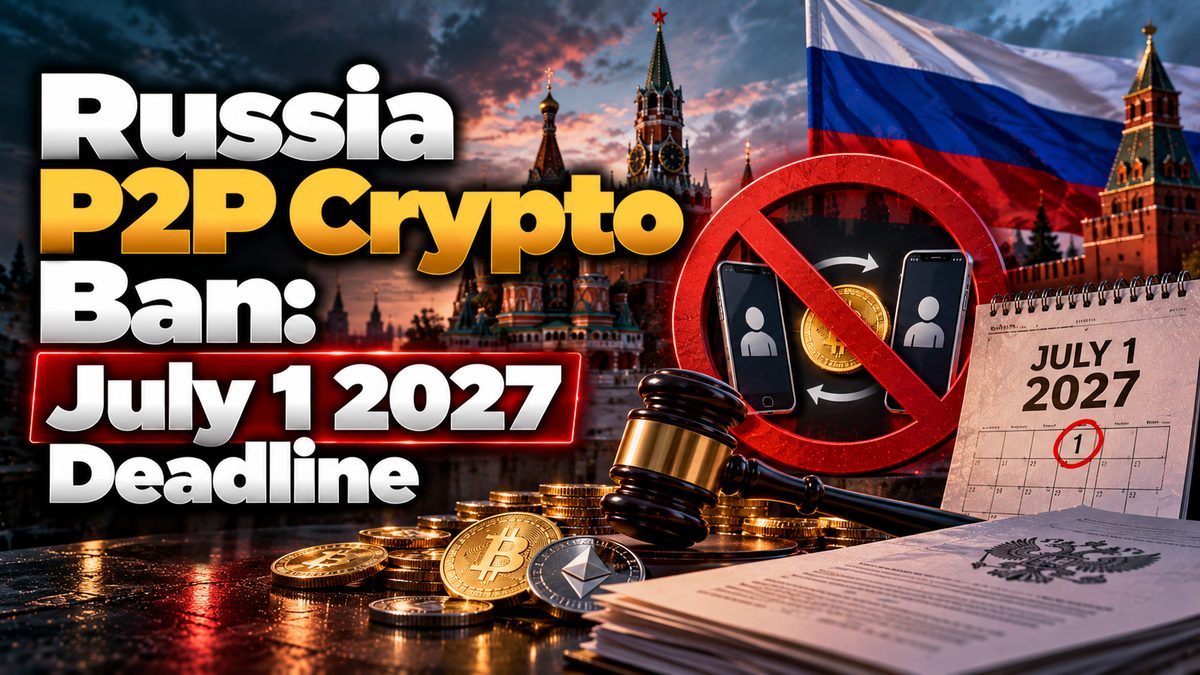
Russia setting a hard date — July 1, 2027 — to kill direct peer-to-peer crypto trades tells you where this is headed: less room for individuals to move value without the state watching. Pair that with the existing ban on sending funds from digital accounts to self-custody wallets, and the message is clear — permissionless crypto use is getting squeezed out in favor of fully trackable rails. Worth watching how this reshapes on-chain activity out of Russia over the next two years.
A Hard Deadline for P2P Crypto in Russia
Russia has set July 1, 2027 as the date when direct peer-to-peer crypto trades will become banned, as reported by Cointelegraph. Peer-to-peer, or P2P, trading refers to buying and selling crypto directly between individuals, often without going through a centralized exchange's order book, using methods like bank transfers or cash to settle the fiat side of the deal. It has long been a popular route in countries where exchange access is limited or where traders want more privacy and flexibility over price and payment method.
Alongside this future ban, separate rules already in place prohibit transfers from digital accounts to self-custody wallets. Self-custody means holding crypto in a wallet where the user alone controls the private keys, rather than leaving it with a custodian like an exchange. Blocking transfers into self-custody wallets effectively keeps funds within monitored, custodial infrastructure rather than letting them move into wallets the state cannot easily track.
Why This Matters for Crypto Oversight
Taken together, these two measures point toward a system where crypto activity is pushed onto rails that are visible and auditable by authorities. Banning direct P2P trades removes a channel where value can change hands without passing through a regulated intermediary, while restricting self-custody transfers limits the ability to exit custodial platforms entirely. For any government, this kind of structure makes it easier to monitor flows, enforce tax rules, and limit the use of crypto for transactions that bypass official financial channels.
This is a broader pattern seen in various forms globally, where regulators balance allowing crypto market participation against concerns over money laundering, capital flight, or sanctions evasion. Russia's approach, setting a firm date years in advance, gives market participants time to adjust but also signals a clear long-term direction rather than a temporary restriction.
What This Means for Spot Traders
For spot traders, especially those operating within or transacting through Russia, this shifts the practical landscape of how crypto can be acquired and moved. Relying on direct P2P deals or planning to shift holdings into self-custody wallets from a digital account may become harder or impossible within the affected jurisdiction once the rules take effect. Traders elsewhere should note this as a data point on how national regulation can reshape access to decentralized trading methods over time, even if it doesn't directly affect their own market access.
More broadly, this is a reminder that regulatory environments can change the practical mechanics of holding and moving crypto, separate from price action. For those holding spot positions, patience and steady position building through dollar-cost averaging remain a straightforward way to manage exposure without reacting to every regulatory headline. It's worth watching how enforcement unfolds and whether similar restrictions on P2P trading or self-custody transfers appear in other jurisdictions, since these mechanisms tend to influence overall on-chain liquidity and trading patterns over the following months and years.