
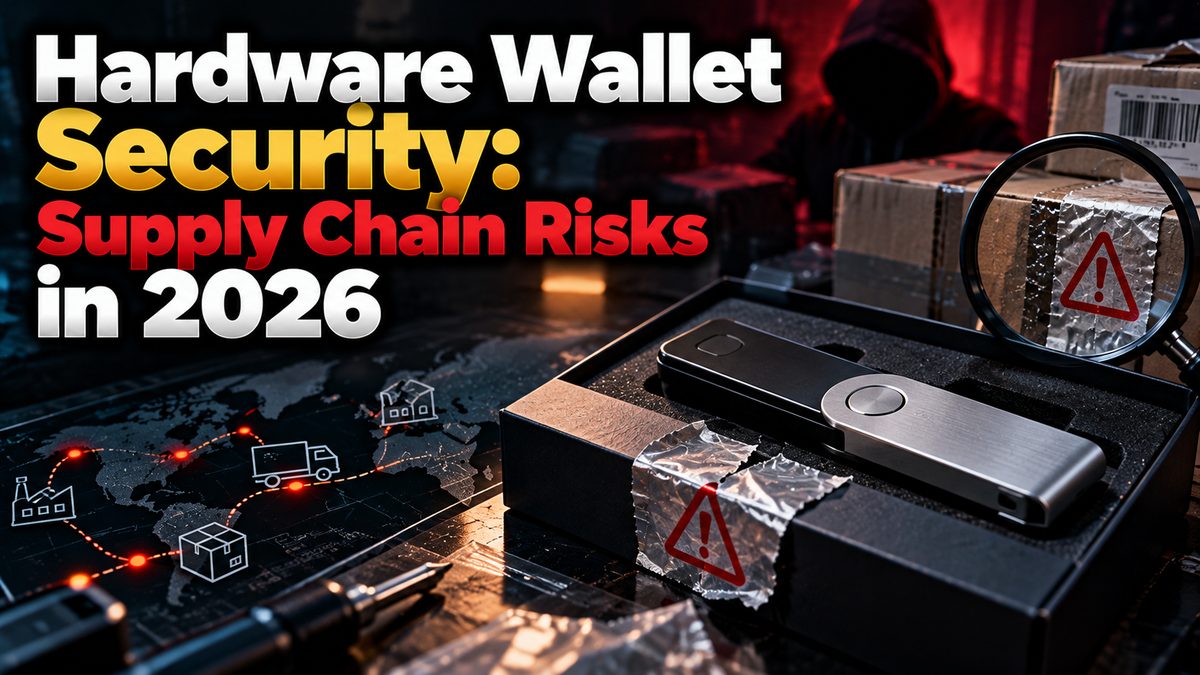
Coldcard, Trezor, Tangem, BitBox, SafePal, and Ledger have all run into trouble in 2026, and tampered Ledger devices are now showing up well beyond Asia. If even the top cold storage brands are getting hit, the lesson is simple: buy direct, check seals, and don't assume a device is clean just because the box looks sealed. Hardware wallets still beat leaving funds on an exchange, but "cold storage" doesn't mean "zero trust needed."
Six Major Wallet Brands, One Bad Year
Coldcard, Trezor, Tangem, BitBox, SafePal, and Ledger have all run into trouble in 2026, as reported by BeInCrypto. These six names cover most of the hardware wallet market that traders rely on to keep private keys offline, so a year where every one of them has faced some kind of security issue is notable on its own. On top of that, tampered Ledger devices, previously more concentrated in Asia, are now turning up well beyond that region.
What a Hardware Wallet Is Supposed to Do
A hardware wallet is a small physical device that stores a user's private keys offline, away from internet-connected computers and phones. The idea is that even if a trader's laptop gets infected with malware, the keys never leave the device, and transactions have to be physically confirmed on it. This is why hardware wallets are generally considered far safer than leaving funds on an exchange or in a software wallet. That security model depends on one core assumption: the device itself, from factory to unboxing, has not been altered by anyone before it reaches the owner.
Why Tampering Beats the Hardware Itself
The attacks referenced in the BeInCrypto report target that assumption directly rather than trying to break the encryption on the device. A tampered device can be intercepted somewhere between manufacturing and the buyer, altered, resealed, and sent on its way looking untouched. If a device is compromised before a user ever sets it up, the usual safeguards, PIN codes, seed phrase backups, confirmation screens, may not protect against keys or recovery phrases being exposed to whoever tampered with it. This is a supply-chain problem, not a flaw in the cryptography each brand built. It explains why incidents can hit multiple reputable brands at once: the weak point is distribution and handling, not the chip design.
What This Means for a Spot Trader
For someone holding coins in spot positions, the practical takeaway is not to panic-sell or abandon hardware wallets altogether. Cold storage still removes a device from the constant exposure that comes with keeping funds on an exchange or a hot wallet. But buying a device secondhand, from an unverified reseller, or accepting one that arrives with a broken or questionable seal introduces real risk regardless of the brand name on the box. Buying directly from the manufacturer, verifying the device on first setup, and generating a fresh seed phrase rather than trusting one that came pre-printed are basic habits worth treating as non-negotiable.
This also reinforces why patience and gradual position building matter more than reacting to headlines. A trader who dollar-cost averages into spot positions and stores funds carefully over time is less exposed to a single bad moment, whether that is a market swing or a compromised device, than someone who treats any one wallet or transaction as a make-or-break event. Security, like position sizing, is best built as an ongoing habit rather than a one-time decision.