
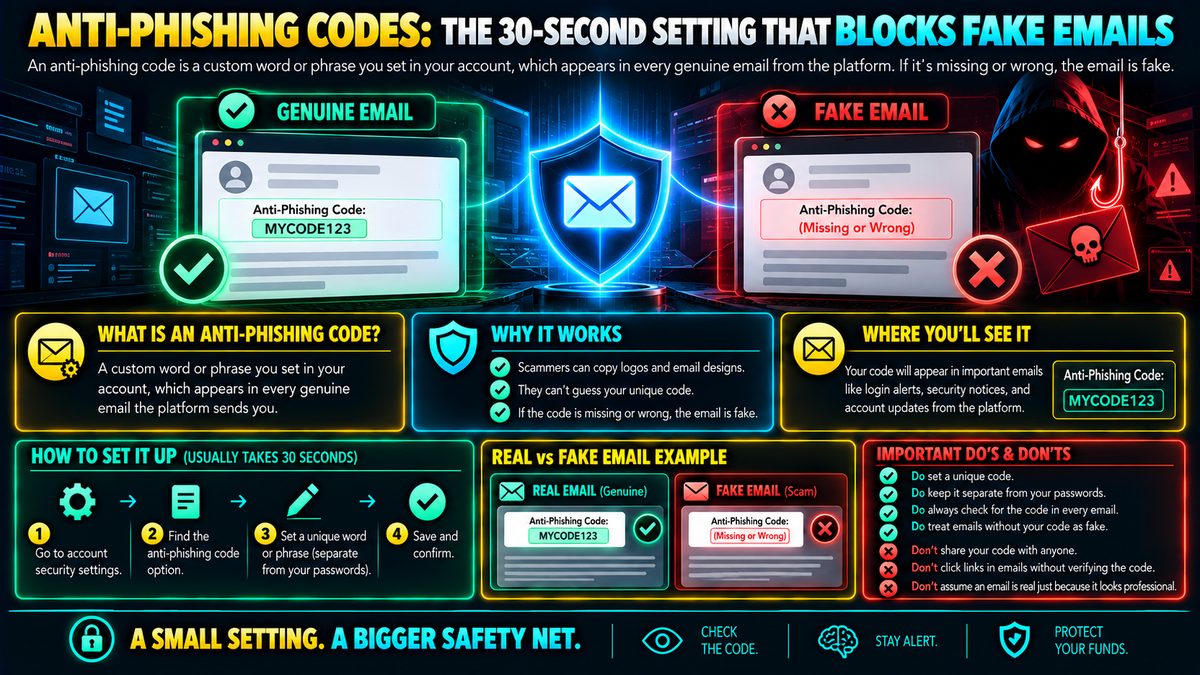
An anti-phishing code is a custom word or phrase you set in your account, which then appears in every genuine email the platform sends you. If an email claiming to be from them is missing that code, or shows the wrong one, it's fake — even if the logo and design look perfect. Scammers can copy branding easily, but they can't guess your unique code. Set one wherever it's offered, keep it separate from your passwords, and always check for it before clicking any link in a crypto-related email.
What An Anti-Phishing Code Actually Is
An anti-phishing code is a short piece of text, usually a word, phrase, or string of letters and numbers, that you choose yourself and save in your account settings. Once it's set, any legitimate email a platform sends you, like a login alert, withdrawal confirmation, or newsletter, will include that exact code somewhere in the message. It is not a password and it does not grant access to anything. Its only job is to act as a signature that proves the email really came from the platform you registered it with.
The idea is simple but powerful. Phishing, for anyone unfamiliar with the term, is when someone impersonates a trusted service to trick you into clicking a malicious link or handing over sensitive details. Scammers can copy a company's logo, color scheme, and email layout almost perfectly, but they cannot see what code you privately set inside your account. That gap between what they can fake and what they cannot is exactly what this feature protects.
How It Actually Works Behind The Scenes
When you set an anti-phishing code, the platform stores it against your account. From that point on, its email system automatically inserts your chosen code into the templates it sends you. A scammer sending a fake email has no access to that database entry, so their message will either have no code at all, a generic placeholder, or the wrong text entirely.
This means the check is fast and requires no technical skill. You open an email claiming to be from a crypto platform, glance for your code, and immediately know whether the message deserves further trust. If the code is missing or wrong, you can safely assume the email is fraudulent and stop reading right there, without needing to inspect links or sender addresses closely.
How Traders Use It Day To Day
The practical habit is small: before clicking any link in an email about deposits, withdrawals, security alerts, or account changes, look for your code. Many people set it once during account setup and then check for it almost automatically, the same way you might glance at a caller's name before answering a phone.
It works best as a first filter, not a final verdict. Even if a code is present and correct, it is still worth checking that the email address itself looks legitimate and that you were not asked to enter your password or seed phrase anywhere unusual. The code confirms authenticity of origin, but good judgment still matters for everything else in the message.
Common Mistakes And Limitations
The biggest mistake is treating the code like a secret password and reusing something you already use elsewhere, such as part of an actual password or a phrase tied to other accounts. If that code somehow leaks alongside other data, it stops being unique and useful. Choose something distinct that you have not used for anything else.
Another limitation is scope. The code only protects communications from the specific platform where you set it. It does nothing for texts, phone calls, direct messages on social media, or emails claiming to be from unrelated services. It also cannot protect you if you never set one in the first place, since an absent code is easy to forget to check for.
Fitting It Into Broader Security Habits
An anti-phishing code works best alongside other basics: two-factor authentication, unique passwords per platform, and skepticism toward urgent-sounding messages asking you to act immediately. No single setting guarantees safety, and this one does not prevent every scam, it only helps you catch a common type of fake email before it does damage. Treating it as one layer among several, rather than a complete solution, is the safest mindset.