
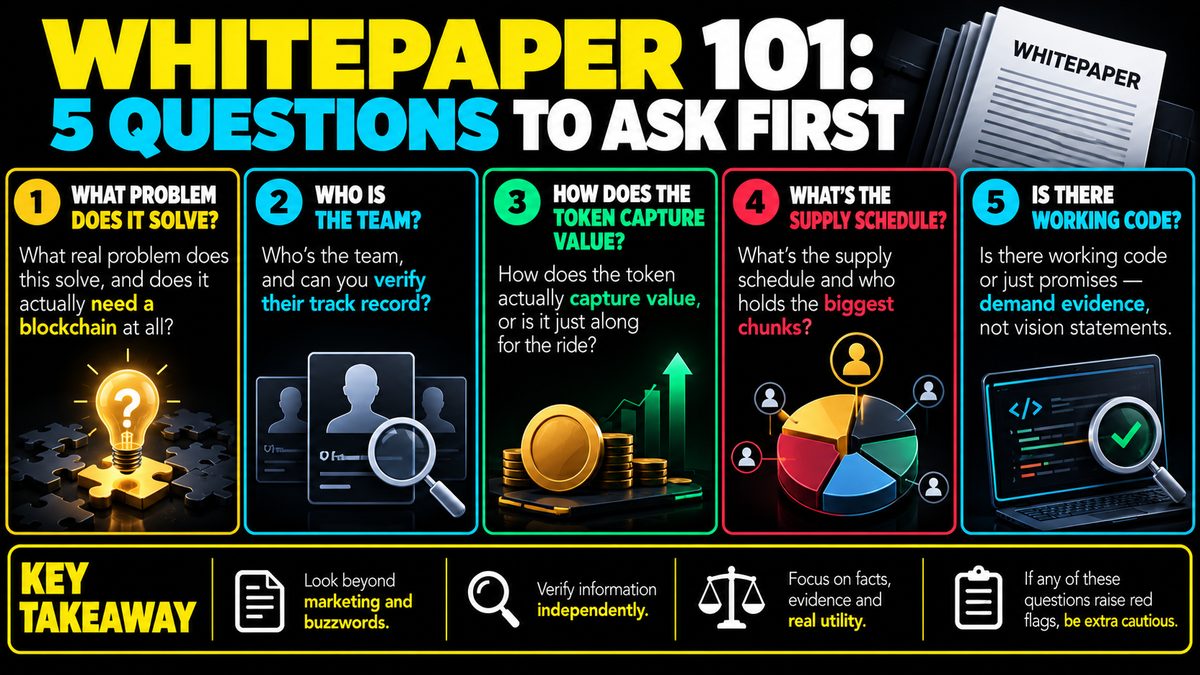
Before diving into technical jargon, ask: What real problem does this solve, and does it need a blockchain at all? Who's the team, and can you verify their track record? How does the token actually capture value, or is it just along for the ride? What's the supply schedule and who holds the biggest chunks? Finally, is there working code or just promises — demand evidence, not vision statements.
Does This Problem Actually Need A Blockchain
Every whitepaper opens with a problem statement, but the first useful skill you can build is learning to separate a real problem from a rephrased sales pitch. Ask what specifically is broken about the current way of doing things, and then ask whether a blockchain, a public and shared record-keeping system that many computers maintain together without one central owner, is actually required to fix it. Some tasks genuinely benefit from being open, tamper-resistant, or free of a single controlling party. Many others could be done just as well with an ordinary database or app, and the blockchain is bolted on mainly because it sounds innovative. If you cannot explain in one plain sentence why decentralization matters for this specific use case, that is worth noticing before you read any further.
Who Is Actually Behind It
Names and photos on a website are easy to produce; a verifiable track record is not. Look for team members who link to real, checkable work history, prior projects, code repositories, or public talks, rather than vague titles and stock-photo energy. Anonymous teams are not automatically disqualifying since some respected projects started that way, but anonymity does raise the bar for everything else in the document, because there is less personal reputation on the line if things go wrong. Try to find independent confirmation of claims rather than trusting the whitepaper's own description of its founders.
How Does The Token Actually Earn Its Keep
A lot of projects describe an interesting product and then simply assume the token benefits from that product's success, without explaining the mechanism. Ask directly how the token captures value from the network's activity. Does holding or using it grant a specific right, such as paying fees, participating in decisions, or accessing a service that cannot be accessed otherwise? Or is the token more of a passenger, attached to the idea mainly so there is something to sell? A project can be useful technology while still having a token with a weak or unclear economic design, and those are two separate questions you should answer independently.
Supply Schedule And Who Holds The Biggest Share
Token economics, often shortened to tokenomics, describes how many units exist, how many will ever exist, and how new ones enter circulation over time. Look for the total supply, the release schedule, and whether large amounts are reserved for the team, early investors, or a foundation treasury. Concentration in a few wallets does not automatically mean bad intent, but it does mean a small group can influence price or governance in ways that an average holder cannot. Imagine a hypothetical token where eighty percent is held by ten wallets at launch; whatever the stated mission, that structure changes the risk picture meaningfully.
Evidence Over Vision Statements
Whitepapers are, by design, optimistic documents written to attract interest and funding. The real test is whether any of it exists yet. Is there a public code repository with actual commits and activity, a working test version, audited smart contracts, or independent technical reviews? Or is the entire case built on diagrams, roadmaps, and confident language about the future? Promises cost nothing to make. Working software, verifiable usage, and third-party audits cost real effort to fake convincingly, which is why they carry more weight.
Putting It Together With Risk Management
None of these five questions can tell you what a token's price will do, and answering them well is not a guarantee of anything, including survival of the project itself. Treat this as one layer of research alongside your own broader due diligence, position sizing, and willingness to accept that you could lose whatever you commit. A strong answer to all five questions reduces certain kinds of risk; it does not remove risk, and no document, however well written, can substitute for your own judgment and caution.