
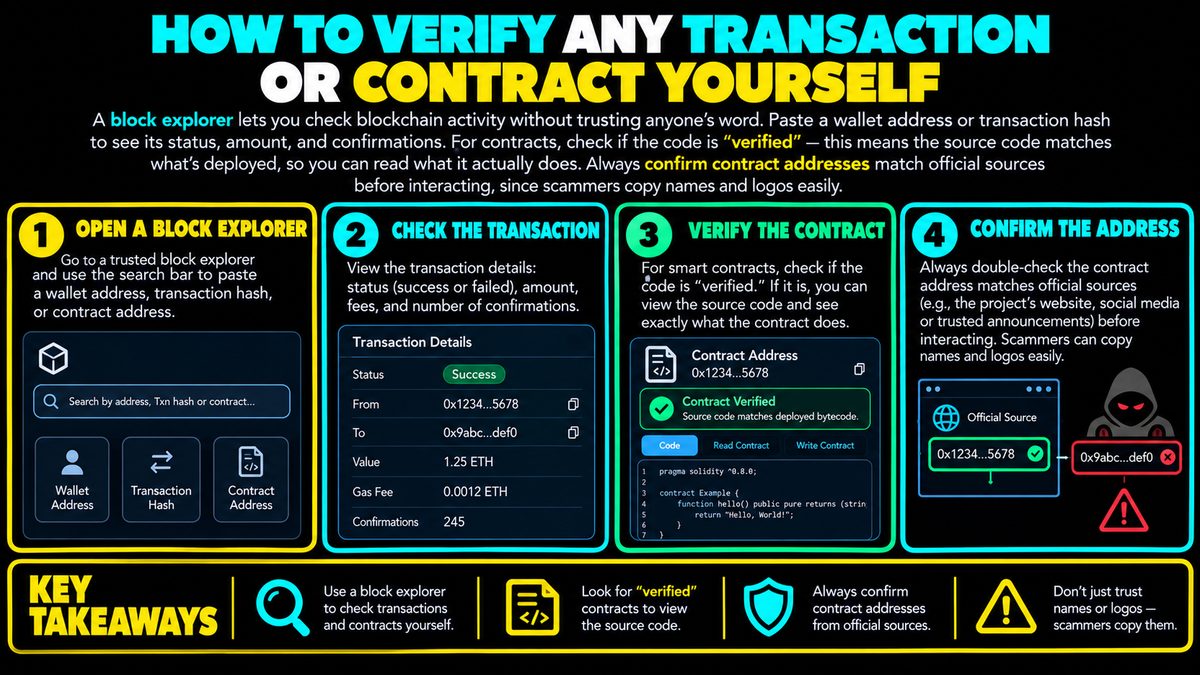
A block explorer lets you check blockchain activity without trusting anyone's word. Paste a wallet address or transaction hash to see its status, amount, and confirmations. For contracts, check if the code is "verified" — this means the source code matches what's deployed, so you can read what it actually does. Always confirm contract addresses match official sources before interacting, since scammers copy names and logos easily.
What a block explorer actually does
A blockchain is just a giant shared ledger, a record of every transaction that has ever happened on that network. A block explorer is a website or tool that reads this ledger and shows it to you in a readable format, instead of raw computer code. Think of it like a search engine for a specific blockchain. You can type in a wallet address, which is like an account number, or a transaction hash, which is a unique ID given to every transaction, and the explorer will show you what happened, when, and whether it succeeded.
Every major blockchain network has its own explorer, since each chain keeps its own separate ledger. The information shown is public and cannot be altered, because it comes directly from the blockchain itself rather than from a company's internal database. This means you do not have to trust what a person tells you about a payment or a project. You can check it yourself.
Reading a transaction
When you paste a transaction hash into an explorer, you will typically see several pieces of information. There is a status, usually shown as success, pending, or failed. There is the amount transferred, the sending and receiving addresses, the network fee paid, and a timestamp. You will also see confirmations, which count how many new blocks have been added to the chain since that transaction occurred. More confirmations generally mean the transaction is more deeply settled into the ledger and less likely to be reversed or affected by a network issue.
If you are waiting for a deposit or payment to arrive, checking its confirmation count on an explorer is far more reliable than simply waiting and hoping. It also helps you spot problems early, such as a transaction stuck with a fee too low to be processed quickly.
Checking a smart contract
Many blockchains support smart contracts, which are self-executing pieces of code that handle things like token transfers, lending, or trading automatically. When a contract is deployed, the blockchain only stores the compiled code, which is unreadable to humans. A contract is called verified when the original human-readable source code has been submitted and matches the deployed code exactly. This lets anyone read what the contract is actually designed to do, rather than taking the creator's word for it.
An unverified contract is not automatically a scam, but it does mean you are trusting a black box. Verification is one of the simplest checks available before interacting with any new project, since it at least allows informed observers to review the logic.
Why the address itself matters
Scammers frequently copy a legitimate project's name, logo, and website design, then deploy their own imitation contract or set up a lookalike wallet address. Because anyone can create a token or contract on most blockchains, having a convincing name means nothing on its own. Always compare the exact contract address character by character against an address published through a project's official, verified channels, not just a search result or a message from a stranger.
A single changed character creates a completely different address pointing to an entirely different, unrelated contract.
Limitations and how this fits your routine
A block explorer confirms that something happened and can help you read what code does, but it cannot tell you whether a project is trustworthy, profitable, or safe to use. Verified code can still contain risky or malicious logic that simply takes more effort to understand. Explorers are a verification tool, not a guarantee of safety, and they work best alongside other habits like researching a project independently, starting with small amounts, and never rushing a decision because of urgency or hype.